
 Anglais
 Français
 Espagnol
 Russe
Russe Arabe
Arabe Italie
Située dans la partie sud de la péninsule du Shandong et sur la côte de la mer Jaune, Qingdao est une ville côtière célèbre qui intègre parfaitement « les tuiles rouges, les arbres verts, la mer bleue et le ciel bleu » avec le style européen et la beauté des montagnes et de la mer. En tant que l'une des premières villes côtières ouvertes de Chine et ville historique et culturelle nationale, Qingdao possède l'élégance rétro de l'architecture de style allemand, la grandeur magnifique du pays des fées du Laoshan, la passion de la capitale de la bière et le goût frais et moelleux des fruits de mer. Elle est connue comme la « Suisse orientale » et, plus encore, comme une ville côtière romantique que vous ne voudrez plus quitter une fois arrivé.
I. Attractions incontournables : les montagnes et la mer s'embrassent, des paysages à chaque étape
(1) Vieille ville classique : tuiles rouges, arbres verts et style européen
1. Jetée de Zhanqiao (point d'intérêt de Qingdao)
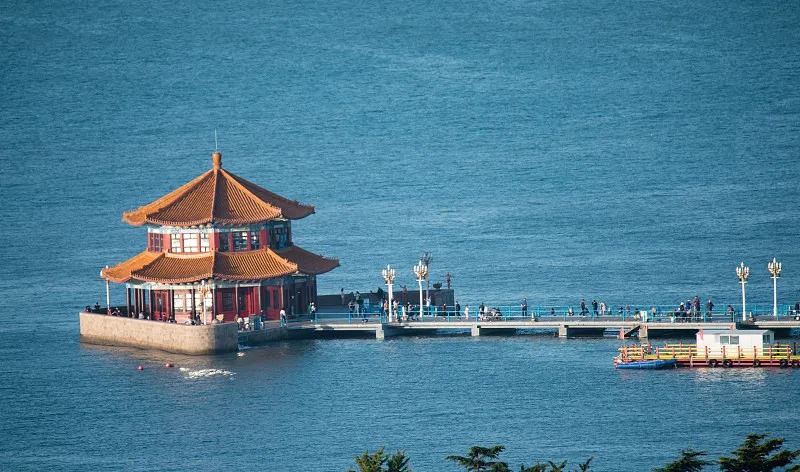
Symbole de Qingdao, un couloir marin de 440 mètres de long s'étend dans la mer, avec au bout l'élégant pavillon Huilan. En hiver (de novembre à mars de l'année suivante), vous pouvez nourrir des milliers de mouettes, ce qui constitue une scène spectaculaire ; lorsque la marée monte, les vagues déferlent et « Feige Huilan » (le pavillon tourbillonnant aux vagues déferlantes) est l'un des dix meilleurs sites pittoresques de Qingdao ; le soir, vous pourrez admirer le magnifique tableau des tuiles rouges de la vieille ville reflétant le bleu de la mer.
2. Badaguan (Exposition mondiale d'architecture)
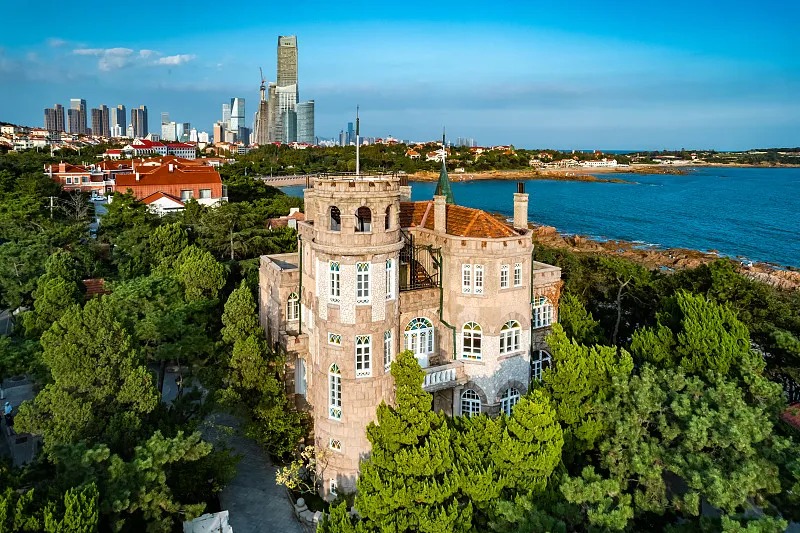
Une zone de villas rassemblant des styles architecturaux de plus de 20 pays, avec plus de 200 villas caractéristiques cachées parmi les fleurs quatre saisons et les forêts luxuriantes. Il y a des pommettes au printemps, des myrtes de crêpe en été, des ginkgos en automne et des pins et des cyprès en hiver, ce qui le rend pittoresque toute l'année. Points d'enregistrement principaux : Flower Stone House (style château européen), Princess House (style conte de fées danois), associé à la plage de récif de Second Beach, c'est un excellent endroit pour se promener et prendre des photos.
3. Signal Hill Park (meilleur point de vue pour le panorama de la vieille ville)
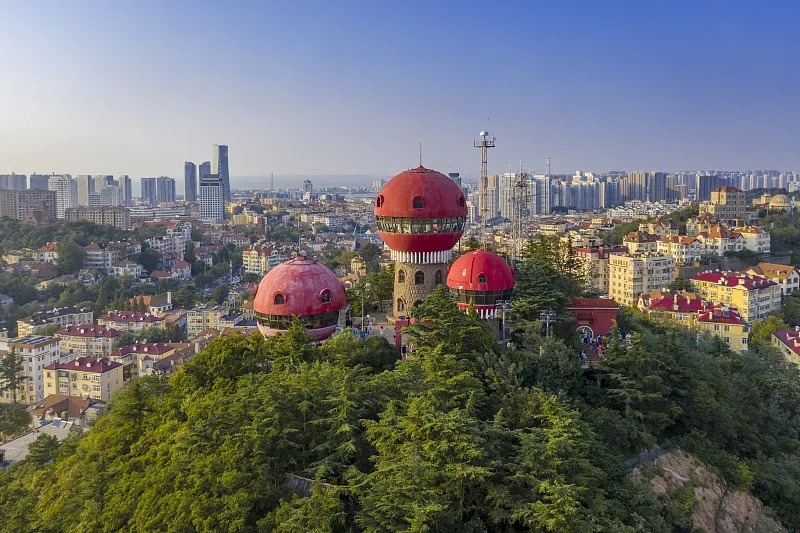
Avec une altitude de 98 mètres, la plate-forme d'observation rotative à 360° au sommet (billet 10 yuans) permet de surplomber toute la vieille ville : les toits de tuiles rouges sont dispersés de manière ordonnée, les flèches des bâtiments de style allemand se dressent hautes et le bleu de la mer, le bleu du ciel et les arbres verts s'entrelacent. L'essence des « tuiles rouges, arbres verts, mer bleue et ciel bleu » de Qingdao peut être vue d'un coup d'œil, et l'atmosphère est pleine au coucher du soleil.
4. Cathédrale Saint-Michel (roman gothique)
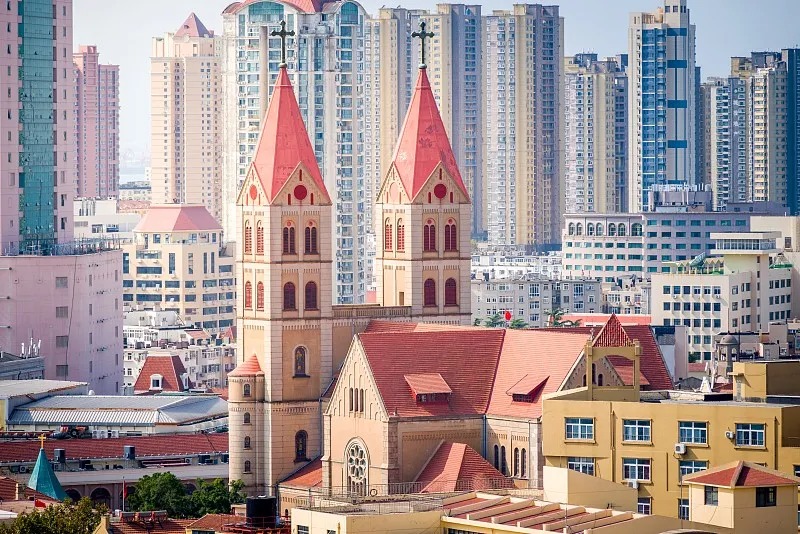
Le plus grand bâtiment gothique de Qingdao et la seule cathédrale consacrée de Chine, avec ses imposantes tours jumelles et ses cloches mélodieuses. Le mur extérieur beige est assorti à une flèche rouge, rétro et solennelle. Le billet coûte 10 yuans et vous pouvez monter dans la tour pour surplomber la vieille ville. C'est un endroit populaire pour les photos de mariage et les enregistrements littéraires.
(2) Paysage côtier : mer bleue et sable doré, romance infinie
1. Parc de l'île Xiaomii (célèbre sur Internet "Petite île de Jeju")

Un jardin marin entouré de tous côtés par la mer, avec de grandes pelouses, des routes en planches de bois et des arbres solitaires sur le fond de la mer bleue, ouvert gratuitement. Il convient aux pique-niques, aux promenades et au coucher du soleil. Le soir, le coucher de soleil orange recouvre la mer, ce qui en fait l'un des lieux d'enregistrement les plus apaisants de Qingdao.
2. Place du 4 mai et centre olympique de voile (monuments modernes de Qingdao)
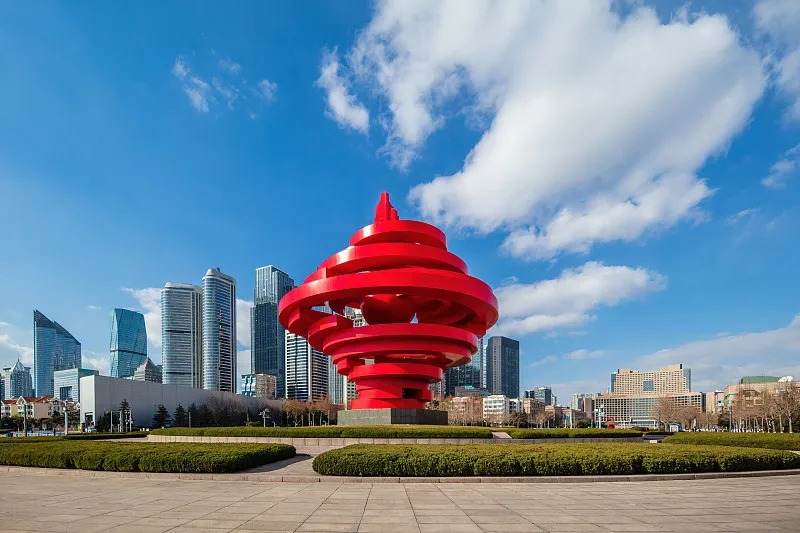
- Place du 4 mai : Le point de repère principal est la sculpture rouge "Vent de mai", qui symbolise la passion et la vitalité de Qingdao. Il y a un superbe spectacle de lumière tous les soirs à 20h00, rendant le littoral brillant.
- Centre olympique de voile : lieu de la compétition de voile des Jeux Olympiques de Pékin 2008. Les voiliers blancs, les phares et la mer forment un magnifique tableau. Lover's Dam est une chaussée romantique pour se promener, regarder la mer et attendre le coucher du soleil. Vous pouvez également prendre un voilier pour découvrir les plaisirs de la voile.
3. Plage de Shilaoren (lever de soleil et sable fin)
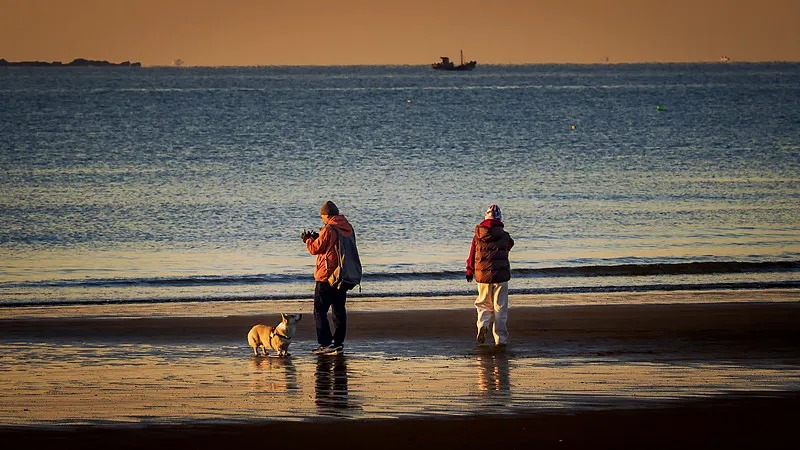
L'une des plages avec le sable le plus fin de Qingdao, avec une large plage et une eau de mer claire. Le lever du soleil est extrêmement beau, avec le soleil du matin se levant de la mer, teignant le ciel et la mer en rouge. Il existe de nombreux cafés célèbres sur Internet, adaptés pour regarder la mer, prendre des photos et nager.
(3) Merveilles de la montagne et de la mer : Montagne des Fées sur la mer, Terre Sainte taoïste

Zone panoramique de Laoshan (montagne n°1 sur la mer, zone panoramique 5A)
"Bien que le mont Tai soit élevé, il n'est pas aussi beau que Laoshan dans la mer de Chine orientale." En tant que plus haut sommet du littoral chinois, il est relié par les montagnes et la mer, entouré de nuages et de brume, avec sept caractéristiques majeures : grandeur, émerveillement, danger, beauté, isolement, mystère et immensité. Itinéraires principaux :
- Ligne Taiqing : Le noyau de la culture taoïste, avec le palais millénaire de Taiqing, ses arbres centenaires imposants et son encens prospère.
- Ligne Yangkou : L'essence des paysages de montagne et de mer, avec des falaises abruptes, une mer bleue et un ciel bleu. Vous pouvez gravir la montagne pour observer la mer et découvrir la grandeur de la « montagne féerique sur la mer ».
(4) Check-in littéraire : intégration de feux d'artifice et de littérature
1. Musée de la bière Tsingtao (noyau de la culture de la bière)
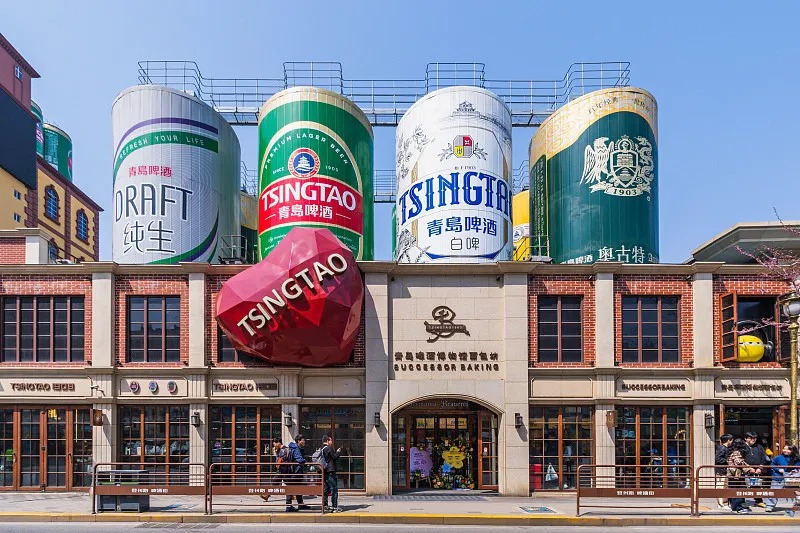
Construit dans l'ancienne usine de la brasserie centenaire Tsingtao, le billet comprend de la bière pression et des grains de bière. Vous pourrez en apprendre davantage sur l'histoire centenaire de la bière Tsingtao, visiter d'anciens équipements et ateliers de fermentation, découvrir la Drunken House et vous plonger dans le charme de la « capitale de la bière ».
2. University Road - Yushan Road Corner (mur littéraire célèbre sur Internet)
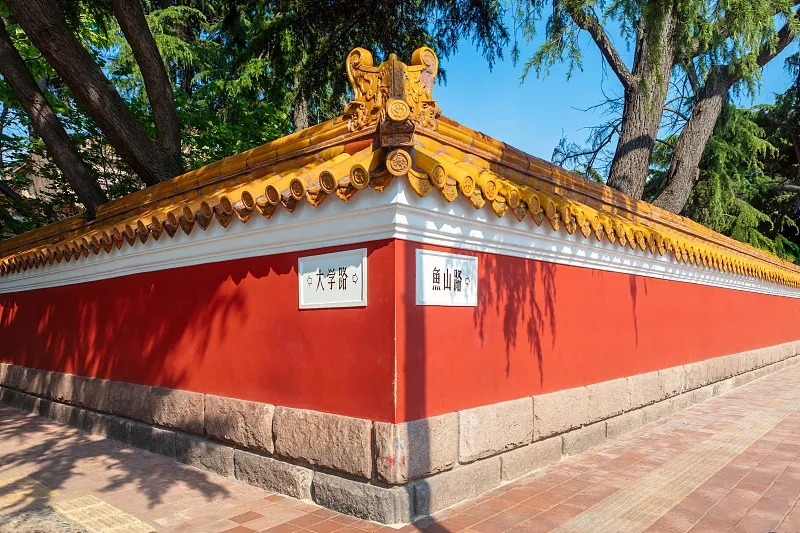
Le mur jaune et la porte rouge sont assortis à l'ombre des platanes, ce qui constitue un coin littéraire populaire sur Internet, ouvert gratuitement. Il existe de nombreuses petites boutiques littéraires et cafés aux alentours. En vous promenant dans la vieille ruelle, vous pourrez sentir le feu d'artifice littéraire de Qingdao.
3. Bloc des célébrités culturelles de Xiaoyushan
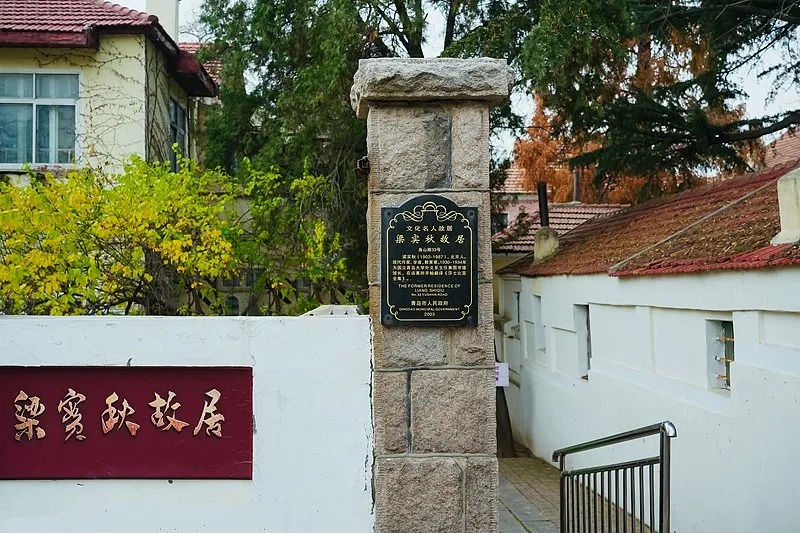
Il condense le style de la vieille ville de Qingdao, avec partout les anciennes résidences de célébrités culturelles telles que Lao She, Kang Youwei et Wen Yiduo. Les petits bâtiments aux tuiles rouges, les ruelles sinueuses et les arbres verts ombragés sont littéraires et calmes, ce qui en fait un bon endroit pour ressentir l'héritage humaniste de Qingdao.
II. Culture caractéristique : intégration du chinois et de l’occidental, héritage profond
(1) Culture architecturale à l’allemande : empreinte européenne du centenaire
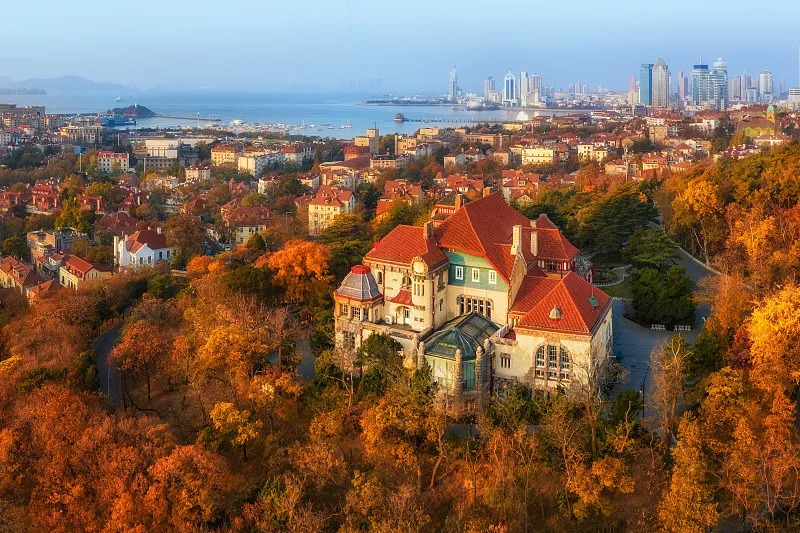
Qingdao est la ville avec la plus grande concentration de bâtiments de style allemand en Chine. Le manoir centenaire du gouverneur allemand, l'église chrétienne, le musée des postes et télécommunications, etc., avec leurs flèches en tuiles rouges, leurs murs extérieurs beiges et leurs treillis de fenêtres sculptés, combinent la rigueur allemande et le romantisme et s'intègrent parfaitement au paysage naturel des montagnes et de la mer, formant un « style Qingdao » unique et témoignant de l'intégration centenaire des cultures chinoise et occidentale.
(2) Culture de la bière : âme de la ville, carte de visite mondiale
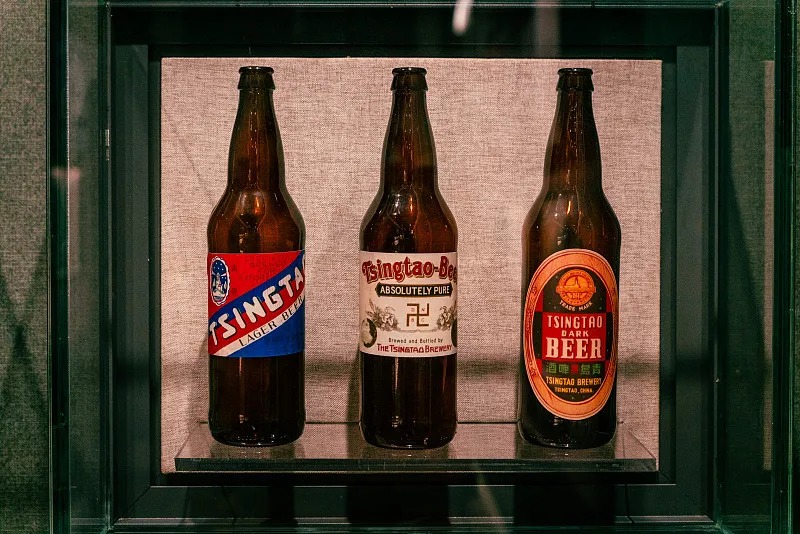
Tsingtao Beer a été fondée en 1903 et est une marque de bière de renommée mondiale. La culture de la bière est intégrée dans le sang de la ville : le Festival international de la bière de Qingdao a lieu chaque mois d'août, avec des fêtes de carnaval et un rassemblement de plats délicieux ; On peut voir des brasseries partout dans les rues, boire de la bière pression et manger des fruits de mer est la vie quotidienne des habitants de Qingdao, et aussi un « rituel de Qingdao » que les touristes doivent expérimenter.
(3) Culture marine : née au bord de la mer, prospère vers la mer
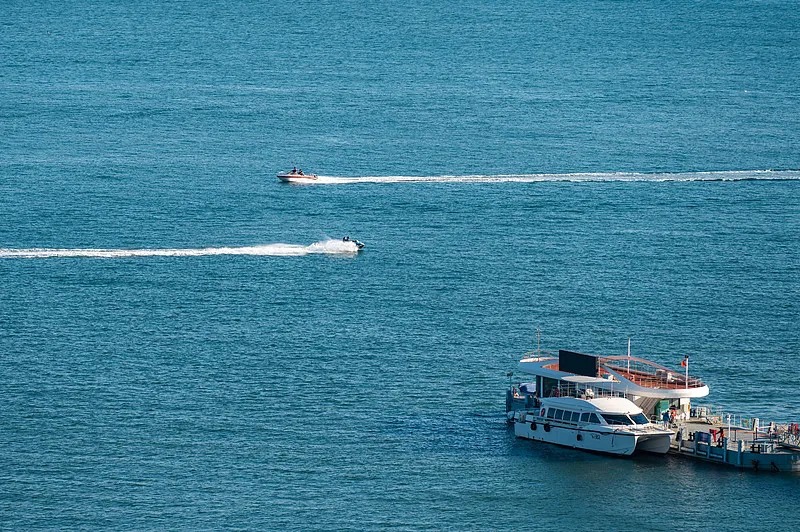
Les activités humaines existaient à Qingdao il y a 6 200 ans. La culture Laiyi a nourri la civilisation marine, et les coutumes populaires telles que le festival d'ouverture de l'océan des pêcheurs, le festival de remerciement de l'océan (patrimoine culturel immatériel national) et la croyance Mazu ont été transmises jusqu'à ce jour ; en tant que célèbre ville des sciences et technologies marines, elle compte un rassemblement de musées marins et d'institutions de recherche scientifique marine, et le « gène marin » est gravé dans les os de la ville.
(4) Patrimoine culturel immatériel : héritage ingénieux, classiques vivants
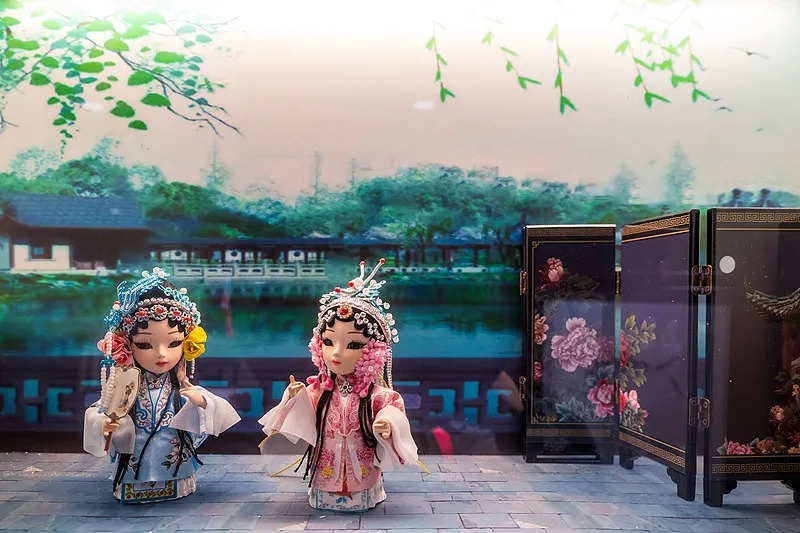
- Jiaozhou Yangko (Patrimoine culturel immatériel national) : L'un des trois principaux yangko du Shandong, avec des mouvements de danse audacieux et vivants et un rythme sonore, montrant l'enthousiasme et l'audace des habitants de Jiaodong.
- Maoqiang/Liuqiang (Patrimoine culturel immatériel national) : opéras locaux à Qingdao, avec des chants mélodieux et une forte saveur locale, interprétant des histoires folkloriques de Jiaodong et profondément appréciées par la population.
- Contes populaires du Laoshan : légendes orales millénaires, notamment des histoires de dieux, de taoïstes et de la mer, qui constituent une partie importante de la culture du Laoshan.
(5) Culture de la cour : mémoire des feux d'artifice du vieux Qingdao
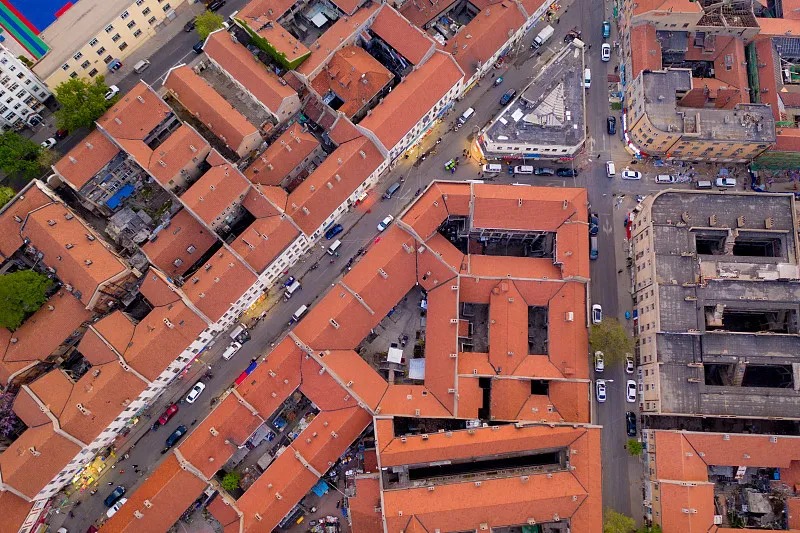
Les bâtiments à cour unique de Qingdao intègrent des cours carrées chinoises et des maisons en rangée occidentales, avec des murs en tuiles rouges, des couloirs en bois et de petites cours dispersées. Ils constituent l'espace de vie des vieux Qingdao, cachant les feux d'artifice du marché et la chaleur du quartier. Le bloc culturel et de loisirs de Dabaodao conserve un groupe complet de cours. En y marchant, vous semblez voyager dans le vieux Qingdao il y a cent ans.
III. Cuisine locale : fruits de mer frais, feux d'artifice moelleux
(1) Fruits de mer Signature : extrêmement frais

1. Dumplings au maquereau (carte de visite alimentaire de Qingdao)
Patrimoine culturel immatériel provincial. Au printemps, le maquereau frais et dodu est désossé manuellement, mélangé à du porc entrelacé et de la ciboulette pour la garniture. La peau est fine, la garniture est grosse, la soupe est pleine, fraîche mais pas de poisson, et la soupe éclate en une seule bouchée. C'est la pièce maîtresse des banquets familiaux des habitants de Qingdao lors des festivals.
2. Palourdes sautées épicées (plat d'accompagnement national de Qingdao avec de la bière)
La « configuration standard » sur les tables à manger des habitants de Qingdao. Les palourdes sont tendres, sautées avec du piment, des oignons verts et du gingembre, avec une soupe légèrement épicée et salée. C'est un accord parfait avec la bière Tsingtao, et presque toutes les tables doivent la commander, ce qui est représentatif des feux d'artifice du marché.
3. Riz à l'intestin de mer (un mets délicat à Jiaodong)
Les intestins de mer sont croustillants et moelleux, la sauce est riche et nappe le bol, parfaitement intégrée au riz gluant. Chaque grain de riz est plein de fraîcheur, si frais qu'on en lèche l'assiette. C'est un incontournable quand on vient à Qingdao.
4. Crevettes braisées au chou chinois (cuisine classique du Shandong)
Les crevettes Bohai sont accompagnées de chou chinois Jiaodong. Les crevettes sont riches en fraîcheur, le chou est moelleux et gluant, blanc avec du rouge, et le goût est pur et beau. C'est un plat fait maison bien connu du Jiaodong.
5. Pétoncles cuits à la vapeur/à l'ail (saveur originale)
La chair des pétoncles est fraîche et sucrée. La cuisson à la vapeur conserve la saveur originale et la cuisson des vermicelles d'ail à la vapeur est parfumée. Le rapport qualité-prix est très élevé et on le voit partout dans les magasins de fruits de mer de rue et les marchés nocturnes.
(2) Snacks caractéristiques : goût de feux d'artifice du vieux Qingdao
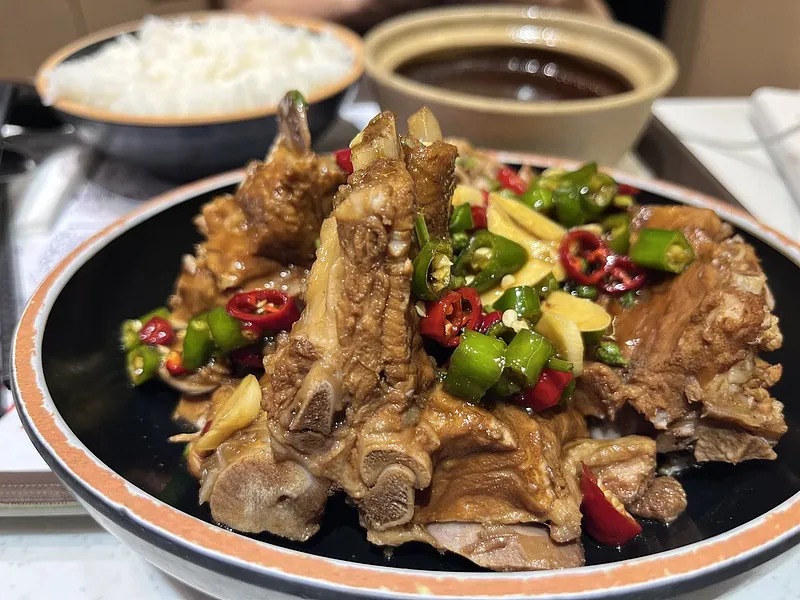
1. Riz aux côtes levées (restauration rapide civile de Qingdao)
Patrimoine culturel immatériel provincial. Les côtes de porc sont cuites lentement dans une vieille soupe, moelleuses et désossées, salées et légèrement sucrées. La soupe est versée sur le riz, qui est bon marché et en grande quantité, chaud et copieux. Il s'agit d'un repas fait maison que les habitants de Qingdao mangent depuis leur enfance.
2. Pieds de porc Liuting (marque centenaire)
Le plat signature de Xinfusheng. Les pieds de porc sont braisés moelleux et gluants, de couleur vive, gras mais pas gras, avec du collagène collant. C'est un bon plat froid et se marie parfaitement avec la bière.
3. Qingdao Guotie (Dumplings poêlés) (croustillants et frais)
Ouvert aux deux extrémités, croustillant au fond, plein de garniture. Les saveurs de crevettes et de trois fraîcheurs sont les plus appréciées, croustillantes à l'extérieur et tendres à l'intérieur, fraîches et parfumées.
4. Gelée d'algues (été limité)
"Gelée marine" bouillie à partir d'agar-agar, QQ élastique et onctueuse, arrosée de purée d'ail, de vinaigre et d'huile de piment, rafraîchissante et soulageant le gras. On le voit partout dans les rues en été.
5. Poulet croustillant Chunhelou (cuisine centenaire du Shandong)
Le plat signature du « Restaurant de cuisine n°1 du Shandong de Qingdao », fondé en 1891. La peau dorée et croustillante est aussi fine et croustillante que du papier, et le poulet à l'intérieur est tendre et juteux, avec un mélange de saveurs salées et fraîches et de riches couches.
(3) Boissons et souvenirs
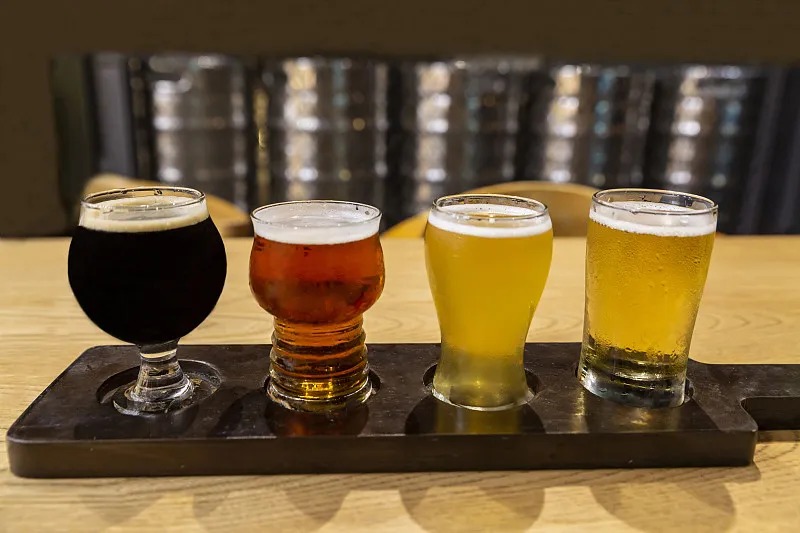
- Tsingtao Draft Beer : Bière fraîchement tirée à la mousse dense et riche en saveur de malt, plus moelleuse que la bière en bouteille, une boisson incontournable dans les brasseries.
- Jimo Old Wine : Un trésor du Huangjiu (vin de riz jaune), héritier d'un savoir-faire millénaire, à l'arôme de vin doux et au goût chaleureux, un bon produit pour se réchauffer en hiver.
- Qingdao Pork Zha (Porc croustillant) : Du porc entrelacé sélectionné, frit lentement, croustillant mais pas gras, plus moelleux et parfumé, un souvenir d'enfance du vieux Qingdao, peut être consommé comme collation ou mijoté dans des plats.
(4) Blocs alimentaires recommandés
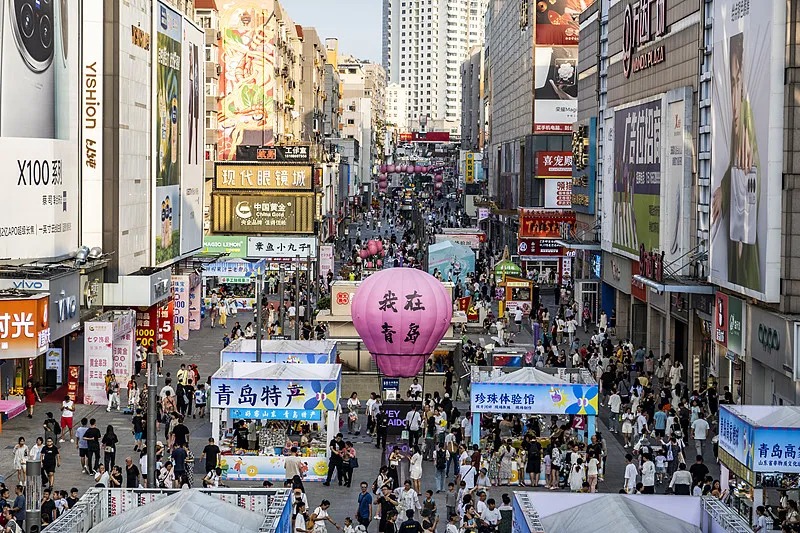
- Rue piétonne de Taidong : le marché nocturne le plus animé de Qingdao, avec Wangjie Barbecue, Wild Wonton, Grilled Squid, Bagged Fresh Beer, plein de feux d'artifice.
- Cour Pichai : Un paradis centenaire des collations, rassemblant des boules de sucre, de la cervelle de tofu, des gâteaux frits, des collations de fruits de mer, le souvenir des feux d'artifice du vieux Qingdao.
- Yingkou Road Market : Un marché de fruits de mer souvent visité par les locaux. Vous pouvez acheter des fruits de mer et les transformer sur place, à un coût élevé, pour découvrir la « liberté des fruits de mer ».
IV. Meilleur temps de voyage
- Été (juin-août) : Station estivale aux eaux de mer chaudes, propice à la baignade en mer, au camping sur la plage, au vélo le long de la route côtière et au carnaval de la Fête de la Bière, la plus populaire.
- Automne (septembre-novembre) : ciel clair et air frais, fruits de mer riches et délicieux, le meilleur moment pour manger des fruits de mer et profiter des paysages d'automne ; les ginkgos de Badaguan jaunissent, pleins d'ambiance.
- Printemps (mars-mai) : les cerisiers et les pommetiers sont en pleine floraison, la vieille ville est pleine de fleurs, excellente pour les sorties printanières, prendre des photos et visiter les villes anciennes, avec moins de touristes et un coût élevé.
- Hiver (décembre-février) : nourrissez les mouettes à la jetée de Zhanqiao et regardez des scènes de neige à Laoshan, avec peu de monde, de beaux paysages et une atmosphère calme, pour découvrir la vie lente du vieux Qingdao.
NOUS. Conseils
- Transport : L'aéroport international de Qingdao Jiaodong propose des vols directs vers de nombreuses villes de Chine ; le train à grande vitesse est pratique, avec des trains directs depuis Jinan, Shanghai et Pékin ; le métro couvre les principaux sites pittoresques. Il est recommandé de marcher ou de prendre un taxi dans la vieille ville, et la conduite autonome ou le vélo conviennent à la route côtière.
- Vêtements : Le vent est fort au bord de la mer, alors faites un bon travail de protection solaire en été, préparez un manteau fin au printemps et en automne, et restez au chaud et coupe-vent en hiver ; il y a de nombreuses routes en dalles de pierre dans la vieille ville, alors portez des chaussures plates confortables.
- Évitez les pièges : évitez de manger des fruits de mer dans des restaurants chers situés dans des endroits pittoresques et préférez acheter et transformer les fruits de mer sur place au marché de Yingkou Road ; consommez rationnellement pendant la Fête de la Bière et soyez attentif aux pièges à prix élevés.