Ningbo
I. Introduction to Ningbo
Ningbo, abbreviated as "Yong", is located on the southern wing of the Yangtze River Delta in northeastern Zhejiang Province. As a National Historical and Cultural City and the East Asian Capital of Culture, it is renowned for its timeless slogan: "A City of Books, A Gateway to the World". Seven thousand years ago, the Hemudu ancestors nurtured a brilliant prehistoric agricultural civilization here, witnessing the parallel origins of Chinese civilization along both the Yangtze and Yellow River basins. Known as "Mingzhou" during the Tang Dynasty, it served as the core departure port of the Maritime Silk Road, where Japanese envoys landed, initiating a thousand-year history of openness to the world. In 1381, Zhu Yuanzhang, the founding emperor of the Ming Dynasty, renamed it Ningbo, meaning "the waves are calm when the sea is settled", a name that has endured to this day.
Ningbo boasts a profound cultural heritage and has long been hailed as a "Famous City of Literature". It was the academic center of Eastern Zhejiang and a highland of book-collecting culture. The city has given birth to intellectual giants such as Wang Yangming and Huang Zongxi, as well as scientific talents including Tu Youyou and Tong Dizhou. With 122 academicians born in Ningbo, it ranks first among all Chinese cities in this regard. Blending the elegance of the Jiangnan water towns with the grandeur of a seaport, Ningbo takes the Sanjiangkou (the confluence of the Yong, Yao and Fenghua rivers) as its urban origin, where Tianyi Pavilion, Moon Lake and Cicheng Ancient County Town weave together its millennial cultural veins.
As a world-class port city, Ningbo Zhoushan Port has ranked first globally in cargo throughput for 16 consecutive years, connecting more than 600 ports worldwide and serving as a strategic hub for the Belt and Road Initiative. Today's Ningbo is both a historic city with deep roots and an open, innovative modern port city. The fusion of traditional scholarly culture and maritime civilization has shaped its urban spirit: "Unity of knowledge and action, forge ahead against difficulties".
II. Introduction to Famous Scenic Spots
1. Tianyi Pavilion·Moon Lake Scenic Area
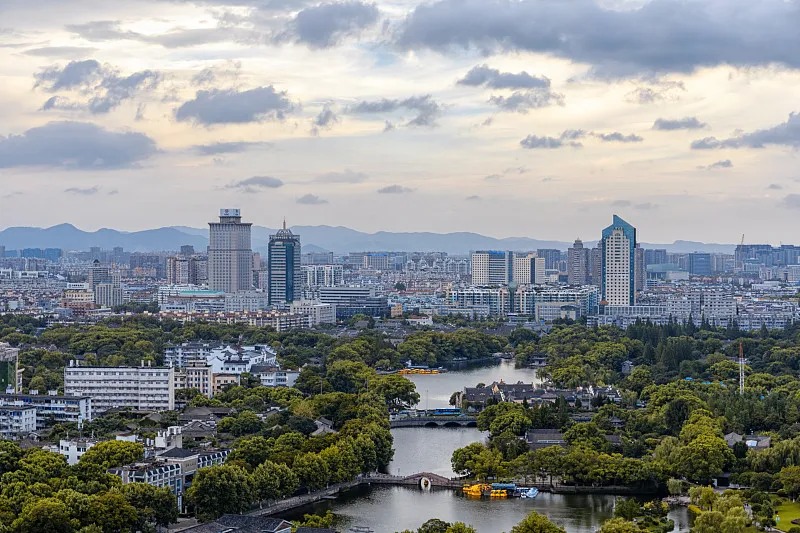
The Tianyi Pavilion·Moon Lake Scenic Area is Ningbo's cultural landmark, composed of Tianyi Pavilion and Moon Lake, integrating book-collecting culture, Jiangnan gardens and lakeside scenery. Built during the Jiajing period of the Ming Dynasty by Fan Qin, Right Vice Minister of War, Tianyi Pavilion was named after the ancient saying "From Heaven comes water", reflecting its fire-prevention design. It is one of the three oldest surviving family libraries in the world. The two-story brick-and-wood structure with double-eaved gable roofs and grey bricks and tiles exudes simple elegance. Its architectural form was imitated by the seven imperial libraries of the Qing Dynasty, including the Wenyuan Pavilion. It currently houses 300,000 volumes of ancient books, preserved through 13 generations of the Fan family who upheld the ancestral precept that "books shall not be divided among generations nor leave the pavilion".
Moon Lake, excavated during the Zhenguan period of the Tang Dynasty, was the academic center of Eastern Zhejiang. Scholars such as Sima Guang and Wang Anshi gathered here to compose poetry during the Song Dynasty. Lining the lake are former residences of celebrities, ancient academies and historical sites, including the He Zhizhang Memorial Hall and the Goryeo Embassy Ruins, which tell stories of the Maritime Silk Road. The scenic area perfectly integrates book-collecting culture with Jiangnan water scenery, where the shimmering lake reflects the fragrance of books, nourishing the millennial cultural heritage. It is a must-visit destination to experience Ningbo's "City of Books" essence.
2. Xikou-Xuedou Mountain Scenic Area
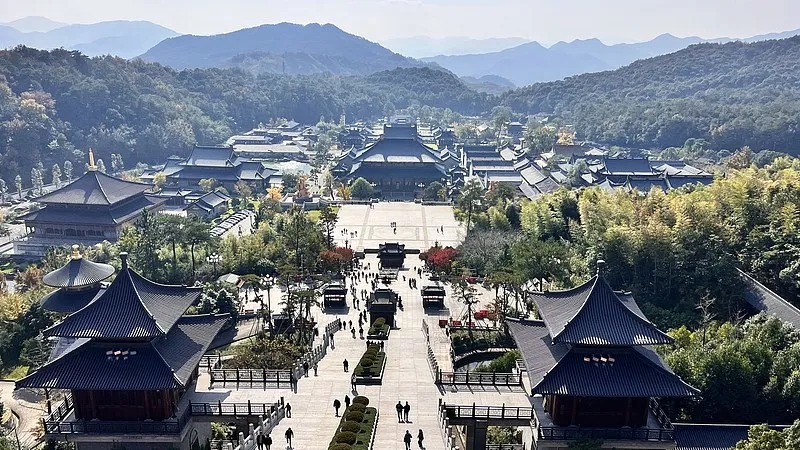
The Xikou-Xuedou Mountain Scenic Area is a national 5A-level scenic spot located in Fenghua District, a perfect blend of Republic of China culture and Buddhist culture. Xikou Ancient Town, nestled beside the Shanxi River and at the foot of Wuling Mountain, is the hometown of Chiang Kai-shek and Chiang Ching-kuo. It preserves well-preserved Republic of China-era buildings such as Fenghao House, Yutai Salt Shop and Wenchang Pavilion, featuring a unique combination of white walls, black tiles and Chinese-Western architectural styles that fully reflect the lifestyle of that period. Wuling Gate, guarded by the calligraphy of Yu Youren on its plaque, marks the entrance to the ancient town. The old street inside is lined with shops selling local specialties like thousand-layer cake and taro heads, exuding a strong Republican-era atmosphere.
Xuedou Mountain, known as "the First Mountain of Siming", was conferred the title "Dream Mountain" by Emperor Renzong of the Song Dynasty. Xuedou Temple on the mountain, founded in the Tang Dynasty, is the sacred site of Maitreya Buddha. This thousand-year-old temple enjoys thriving incense, and houses the world's largest bronze Maitreya Buddha statue, standing 56.7 meters high. The mountain features cascading waterfalls and flowing springs, with scenic spots such as Miaogao Terrace, Sanyin Pond and Xufu Rock combining grandeur and elegance. Known as "the Penglai on the sea, the Tiantai on the land", it harmoniously blends natural landscapes with religious culture.
3. Cicheng Ancient County Town
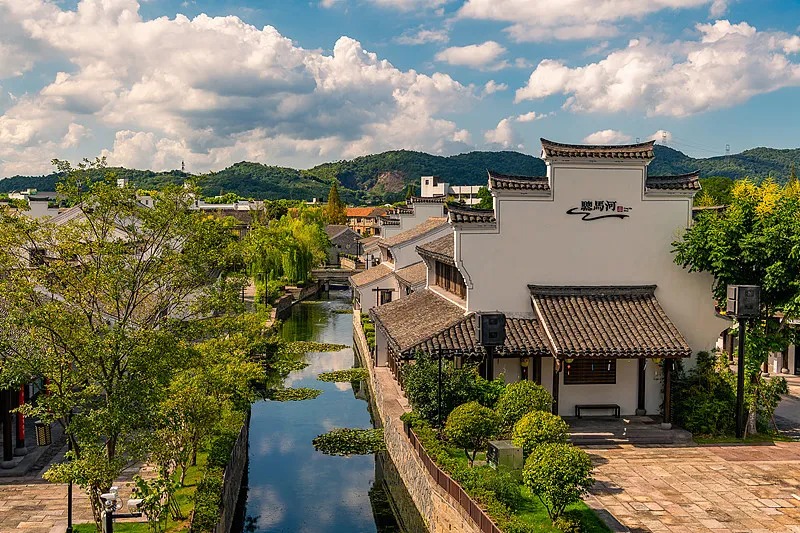
Cicheng Ancient County Town, known as "the Best Preserved Ancient County Town in Jiangnan", was built during the Kaiyuan period of the Tang Dynasty and has completely retained its Tang Dynasty street layout and millennial urban style. The square-shaped ancient town is surrounded by a moat, with crisscrossing streets and alleys following the "one street, one river, connected lanes" pattern inherited from the Tang Dynasty's ward system. It is the best-preserved ancient county town in the Jiangnan region.
The town is densely packed with historical sites. The Confucian Temple is one of the most complete Confucian temples remaining in Eastern Zhejiang, where Wang Anshi of the Northern Song Dynasty wrote "Record of the Cixi County School", whose inscription still exists. The County Government Office, first built in the Tang Dynasty and renovated through successive dynasties, retains a complete layout showcasing ancient administrative architecture. Qingdao Taoist Temple, built against the mountain, embodies profound Taoist culture. In addition, Ming and Qing buildings such as the Medicine Merchant Museum, Baozhu Building and painted gatehouses bear stories of jinshi scholar families and prominent Ningbo merchants. Cicheng is also famous for its rice cakes, with a thousand-year-old craft passed down to this day. The ancient town integrates Tang Dynasty urban planning, Ming and Qing architecture and folk culture, making visitors feel as if they have traveled back a thousand years.
4. Baoguo Temple
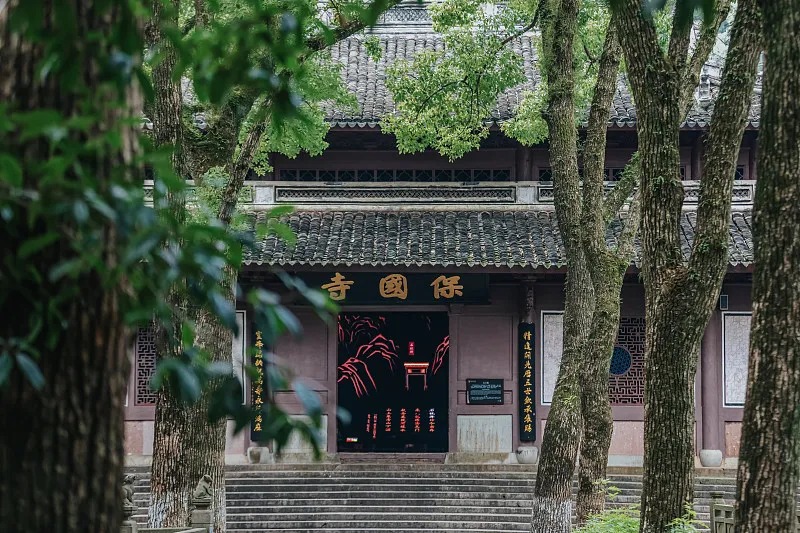
Nestled at the foot of Lingshan Mountain in Jiangbei District, Baoguo Temple is renowned for its treasure of Northern Song Dynasty wooden architecture and is one of the oldest and best-preserved wooden structures south of the Yangtze River. Founded in the Eastern Han Dynasty and rebuilt in the Tang Dynasty, its core essence is the Main Hall reconstructed during the Dazhong Xiangfu period of the Northern Song Dynasty (1008-1016). The hall adopts a nail-free mortise and tenon structure, where all components are joined by interlocking brackets and beams. It has stood firm for a thousand years despite storms and earthquakes, a testament to its extraordinary architectural craftsmanship.
The hall features exquisite caisson ceilings and layered brackets that serve both load-bearing and decorative functions, embodying the "simple, grand and exquisite" style of Song Dynasty architecture. The temple is surrounded by ancient trees, including thousand-year-old ginkgoes and camphors, creating a serene and elegant environment. In addition to the Northern Song Main Hall, there are the Heavenly King Hall, Guanyin Hall and an Ancient Architecture Museum with rich collections systematically showcasing the development of ancient Chinese wooden architecture. Baoguo Temple integrates architectural, historical and artistic values, serving as a living fossil for studying Song Dynasty architecture and an excellent place to appreciate ancient Chinese architectural wisdom.
5. Dongqian Lake
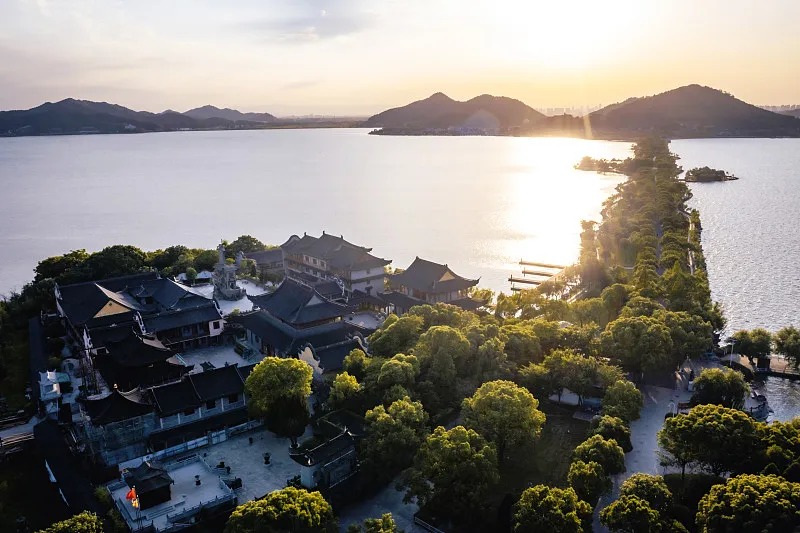
Located in Yinzhou District, Dongqian Lake is the largest natural freshwater lake in Zhejiang Province, known for "the charm of West Lake and the grandeur of Taihu Lake". It combines natural landscapes with profound cultural heritage. Covering an area of 20 square kilometers with a 45-kilometer circumference, the lake features open waters, rippling blue waves and surrounding green mountains. Its scenery changes with the seasons: willow catkins dance in spring, lotus flowers bloom in summer, reeds flutter like snow in autumn, and clear waters shimmer in winter.
Dongqian Lake has a deep cultural accumulation and is an important birthplace of Eastern Zhejiang culture. Fan Li and Xi Shi are said to have lived in seclusion here, leaving behind legends of Taogong Island. The Shi family of the Southern Song Dynasty, including Shi Hao and Shi Miyuan, was a prominent clan whose tombstone carvings are large-scale and exquisitely carved, a rare Southern Song stone carving heritage in Jiangnan. Around the lake are scenic spots such as Little Putuo, Xiayu Temple, Southern Song Stone Carving Park and Hanling Old Street. Little Putuo features temples on an island in the lake, creating a tranquil atmosphere; Hanling Old Street is a thousand-year-old street with continuous Ming and Qing buildings and rich local life. Dongqian Lake perfectly integrates lake scenery, celebrity anecdotes and ancient architectural relics, making it an ideal destination for leisure vacations and cultural exploration.
6. Nantang Old Street
Nantang Old Street is the epitome of Jiangnan water town and market culture in Ningbo. Located in Haishu District along the Nantang River, it stretches from Yongshui Bridge in the north to Yinfeng Road in the south. It is one of the oldest streets in Ningbo, founded in the Southern Song Dynasty. Historically, it was the main commercial thoroughfare in southern Ningbo. The Nantang River, drawing clear water from the Tashan Weir, connects Moon Lake and the Fenghua River, serving as the core of ancient Ningbo's water transportation and commerce.
The street features predominantly Ming, Qing and Republic of China-style architecture with white walls, black tiles and scattered horse-head walls. Winding stone paths, river docks, ancient bridges and covered corridors form a typical Jiangnan water town landscape. Lining the street are shops gathering time-honored Ningbo brands: Gangyagou glutinous rice balls, Zhaodayou pastries, Wangshengda grain and oil, and Nantang fried dough twists, preserving century-old delicacies and rich local life. In addition, there are intangible cultural heritage workshops, folk performances and cultural exhibition halls showcasing traditional Ningbo crafts and daily life. Nantang Old Street integrates water town scenery, commercial history and food culture, allowing visitors to experience the warm market atmosphere and millennial heritage of old Ningbo.

 English
 French
 Spanish
 Russian
 Arabic
 Italy
Italy