Wenzhou
I. Introduction to Wenzhou
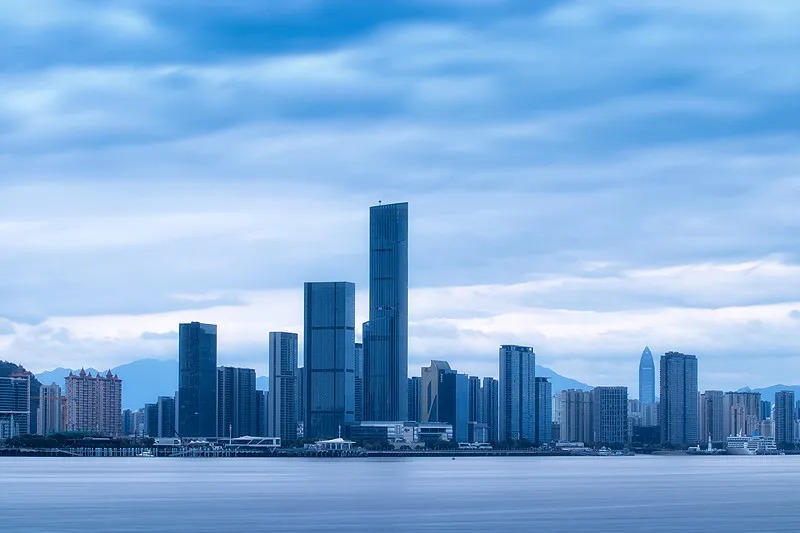
Wenzhou, abbreviated as "Ou" and also known as Lucheng (Deer City), is located on the southeastern coast of Zhejiang Province along the southern bank of the lower Ou River. As a National Historical and Cultural City and East Asian Capital of Culture, it is renowned as "the Zou and Lu of the Southeast, the Hometown of a Hundred Crafts". With over 5,000 years of civilization and 2,200 years of urban history, it was the fiefdom of Zou Yao, King of Eastern Ou, in the third year of Emperor Hui of the Western Han Dynasty. Yongjia Prefecture was established in the first year of the Taining period of the Eastern Jin Dynasty. Legend has it that a white deer carrying flowers circled the city during its construction, hence the name "Lucheng". It was officially named Wenzhou in the second year of the Shangyuan period of the Tang Dynasty, a name that has been used ever since. During the Southern Song Dynasty, Wenzhou prospered commercially and was designated an international trading port, earning the praise "a bustling city on the sea, always called the little Hangzhou". The recently discovered Shuomen Ancient Port Site, with its complete "ancient city-ancient port-waterway" system, confirms its historical status as the core starting point for Longquan porcelain exports along the Maritime Silk Road during the Song and Yuan dynasties.
Wenzhou boasts a profound cultural heritage as the cradle of Chinese landscape poetry, the birthplace of Southern Opera and the Yongjia School of Thought. Xie Lingyun wrote China's first landscape poems here, and Gao Ming's The Lute is hailed as "the ancestor of Southern Opera". The Yongjia School, represented by Ye Shi, advocated the idea of "valuing both agriculture and commerce, integrating righteousness and profit", which profoundly influenced later economic development. The city is rich in intangible cultural heritage, with 5 items inscribed on the UNESCO Intangible Cultural Heritage List, including Yongjia Kunqu Opera and Rui'an wooden movable-type printing. Traditional crafts such as Ou embroidery, Ou sculpture and boxwood carving enjoy international reputations.
As the birthplace of China's private economy, the "Wenzhou Model" is renowned worldwide. The daring Wenzhou people have left their footprints across the globe, forming a unique Wenzhou merchant culture. Today's Wenzhou blends the beauty of mountains and seas with profound humanistic charm. The magnificent Yandang Mountains, the serene Nanxi River and the millennial city's vibrant atmosphere come together to shape its urban spirit: "Business travels the world, wisdom travels the world, kindness travels the world".
II. Introduction to Famous Scenic Spots
1. Yandang Mountain Scenic Area
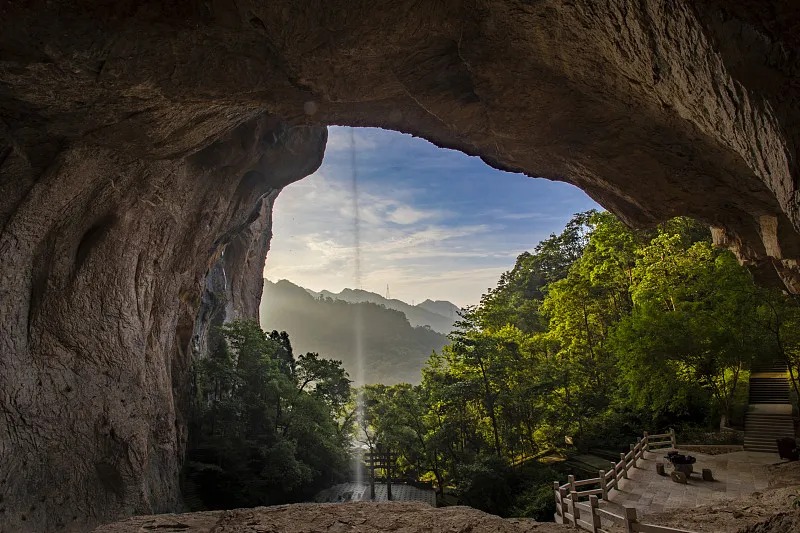
Yandang Mountain is a national 5A-level tourist attraction and World Geopark, named after "the lake on the hilltop where reeds grow and autumn geese roost". Known as "the Famous Mountain on the Sea, the Peerless Wonder in the World", it has been historically called "the First Mountain in Southeast China". Covering a total area of 450 square kilometers, the scenic area is famous for its peaks, waterfalls, caves and cliffs. Lingfeng Peak, Lingyan Temple and Dalongqiu Waterfall are known as the "Three Wonders of Yandang". The night scenery of Lingfeng Peak changes with every step, with formations like Husband and Wife Peak and Rhinoceros Watching the Moon being vividly lifelike. The thrilling Lingyan Flying Rope performance showcases the traditional skills of local mountain dwellers. Dalongqiu Waterfall, with a drop of 197 meters, is one of China's four famous waterfalls, cascading down like a galaxy pouring from the sky with overwhelming momentum.
Yandang Mountain has a profound cultural accumulation and is an important birthplace of Chinese landscape poetry. Generations of literati and scholars, including Xie Lingyun, Li Bai, Du Fu and Xu Xiake, left more than 5,000 poems and 400 cliff inscriptions here. The mountain is dotted with ancient temples such as Lingyan Temple and Guanyin Cave, which are perfectly integrated with the natural landscape. Guanyin Cave, embedded in Hezhang Peak, features nine-story pavilions built against the rock, a marvel of engineering. Yandang Mountain is not only a treasure trove of natural wonders but also a famous mountain bearing millennial culture, with every step revealing stories and showcasing the elegance and magic of southern Zhejiang's landscapes.
2. Nanxi River Scenic Area
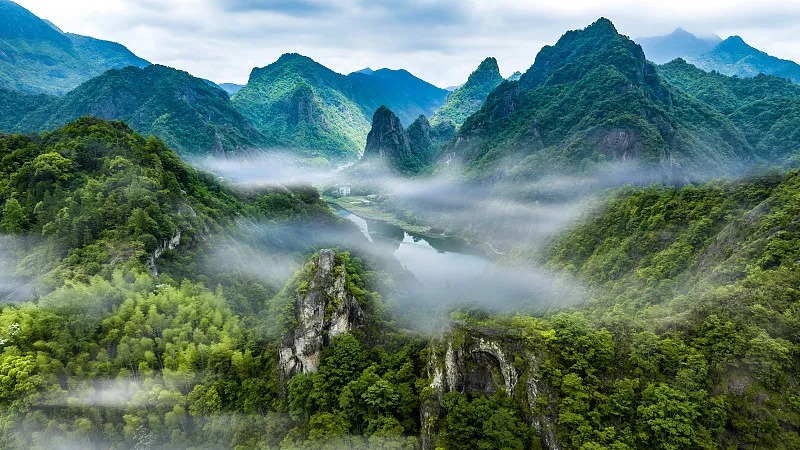
The Nanxi River is a national scenic area where the 300-li winding river meanders through the mountains of Yongjia. Integrating natural scenery and cultural landscapes, it is known as "the Cradle of Chinese Landscape Poetry". This was the main place visited by Xie Lingyun during his tenure as Prefect of Yongjia, where Chinese landscape poetry was born. With towering peaks on both banks and crystal-clear water, drifting down the river on bamboo rafts offers a picturesque view of "water as a blue silk ribbon, mountains as jade hairpins". The scenery changes with the seasons: rapeseed flowers bloom in spring, bamboo rafting is popular in summer, maple leaves turn red in autumn, and plum blossoms bloom in winter.
The most precious treasure of Nanxi River is its well-preserved farming-reading culture and ancient village complex. Dozens of ancient villages such as Furong Village, Cangpo Village and Yantou Village were built during the Tang and Song dynasties, retaining unique layouts like "Seven Stars and Eight Dippers" and "Four Treasures of the Study", reflecting the ancient philosophy that "farming brings wealth, reading brings honor". The villages feature white walls, black tiles and winding stone paths, with ancestral halls, academies and opera stages scattered throughout. Intangible cultural heritage skills such as Yongjia Kunqu Opera, wood carving and paper cutting are still passed down here. The Nanxi River perfectly combines natural beauty with humanistic charm, making it an excellent place for modern people to find nostalgia and experience traditional farming culture.
3. Jiangxin Island
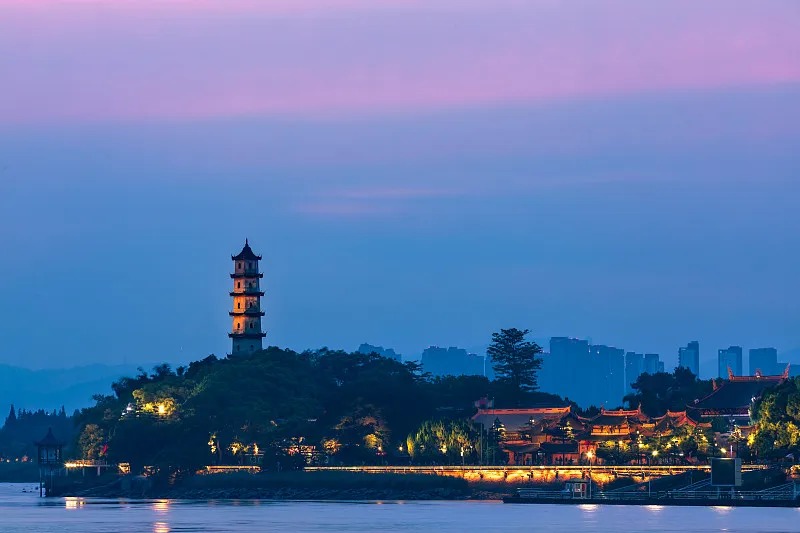
Jiangxin Island, one of China's four famous islands, is located in the center of the Ou River in downtown Wenzhou, covering an area of about 700,000 square meters. Known as "the Penglai of the Ou River", the island has beautiful scenery and a long history. With the East and West Pagodas standing tall against the sky and Jiangxin Temple exuding ancient charm, it has been a popular destination for literati since the Eastern Jin Dynasty. Xie Lingyun, Li Bai, Du Fu and Meng Haoran all left famous poems here, among which Meng Haoran's line "Facing the distant mountains with wine, composing poems together on the lonely island" is widely known.
The East and West Pagodas, built in the Song Dynasty, are not only symbols of Jiangxin Island but also world-famous ancient navigation beacons that have guided ships entering and leaving the Ou River for thousands of years. They were listed as World Navigation Heritage in 2006. Jiangxin Temple, first built in the Tang Dynasty and rebuilt in the Qing Dynasty, features a famous couplet in front that uses multi-sound characters creatively: "Clouds gather, gather, gather, gather, gather, gather and disperse; tides rise, rise, rise, rise, rise, rise and fall". The island also has historical buildings such as the former British Consulate, Haoran Tower and Xie Gong Pavilion, blending Chinese and Western styles and witnessing Wenzhou's modern history of opening up. At night, the illuminated Jiangxin Island contrasts beautifully with the night scenery on both banks of the Ou River, showcasing the charm of Ou-Yue culture.
4. Liu Bowen Hometown Scenic Area
The Liu Bowen Hometown Scenic Area is a national 5A-level tourist attraction located in Wencheng County, the hometown of Liu Ji, the founding father of the Ming Dynasty. Liu Ji, courtesy name Bowen, was a famous statesman, military strategist and writer in Chinese history. He assisted Zhu Yuanzhang in establishing the Ming Dynasty and was praised as "the unparalleled strategist crossing the Yangtze River, the first civil official founding the dynasty". His wisdom and strategy are still celebrated today.
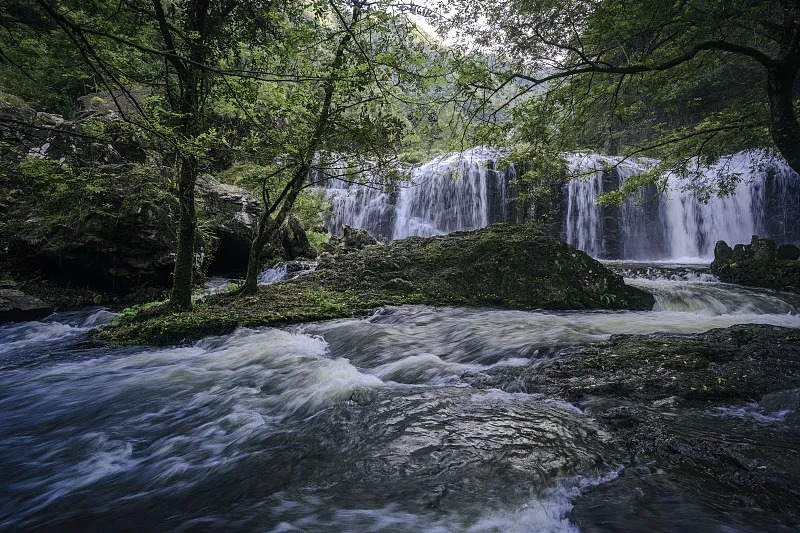
The scenic area consists of two core parts: Liu Ji Temple and Baizhangji Waterfall. Liu Ji Temple, built in the third year of the Tianshun period of Emperor Yingzong of the Ming Dynasty, is a Major Historical and Cultural Site Protected at the National Level. The grand and solemn architecture preserves a large number of Ming and Qing steles and plaques, among which the imperial plaque "Chengyi Bo" bestowed by Zhu Yuanzhang is particularly precious. Every year on the 15th day of the sixth lunar month, Liu Bowen's birthday, a grand Grand Duke Festival is held locally, a folk custom inscribed on the UNESCO Representative List of the Intangible Cultural Heritage of Humanity. Baizhangji Waterfall, known as "China's Highest Waterfall", has a total drop of 353 meters, cascading down in three tiers with thundering sound and magnificent momentum. The scenic area perfectly integrates celebrity culture with natural landscapes, making it a sacred place to cherish the memory of ancient sages and appreciate the grandeur of southern Zhejiang's mountains and waters.
5. Taishun Covered Bridge Cultural Tourism Zone
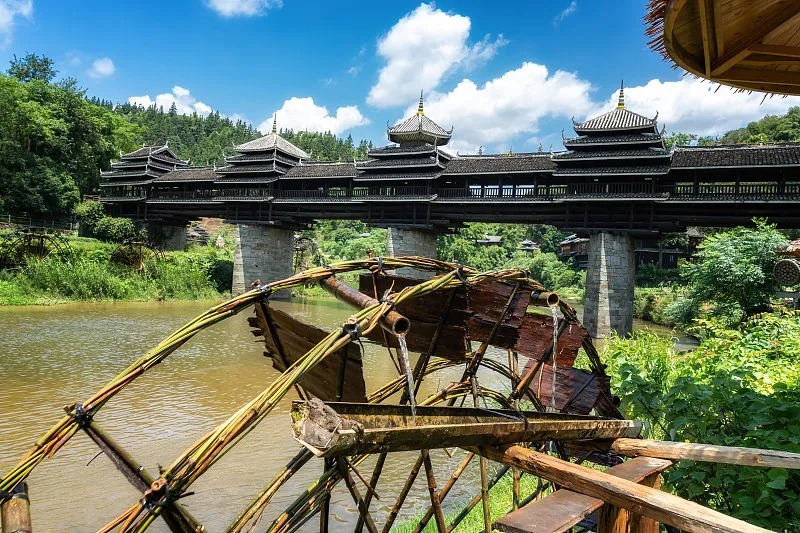
Taishun is known as "the Hometown of Chinese Covered Bridges", preserving more than 30 ancient covered bridges dating from the Song to Ming and Qing dynasties, 15 of which are Major Historical and Cultural Sites Protected at the National Level. The construction technique of Taishun's woven wooden arch bridges is inscribed on the UNESCO Representative List of the Intangible Cultural Heritage of Humanity. These covered bridges are built without a single nail, relying entirely on mortise and tenon joints, and have stood firm for hundreds of years despite wind and rain, demonstrating the extraordinary wisdom of ancient Chinese craftsmen.
The Sixi Sister Bridges are the representatives of Taishun's covered bridges, including Beijian Bridge and Xidong Bridge. Located close to each other, the two bridges are exquisitely shaped and known as "the most beautiful covered bridges in the world". Beijian Bridge, built during the Kangxi period of the Qing Dynasty, spans the Bei Stream with ancient camphor trees on both banks, and its red-walled, black-tiled bridge house contrasts beautifully with the green mountains and clear waters. Xidong Bridge, built during the Longqing period of the Ming Dynasty, features upturned eaves and a magnificent momentum. In addition to covered bridges, Taishun also has well-preserved ancient villages such as Xu'aodi and Hu's Courtyard, as well as unique folk cultures including She ethnic customs and puppet shows. Walking through Taishun, with ancient bridges over flowing water and curling smoke from kitchen chimneys, feels like traveling back to the quiet and simple ancient times.
6. Wuma Historical and Cultural Block
The Wuma Historical and Cultural Block is Wenzhou's urban living room and the oldest and most prosperous commercial street in the city, dating back to the Eastern Jin Dynasty with a history of over 1,600 years. Legend has it that Xie Lingyun, when serving as Prefect of Yongjia, often traveled here with five horses, hence the name "Wuma Fang" (Five Horse Square), which later developed into a commercial street. Centered on Wuma Street, the block connects historical streets such as Chan Street, Park Road and Qiaolou Tower, retaining the complete Chinese-Western arcade architectural style of the late Qing and early Republican periods, with white walls, black tiles and connected arcades exuding a strong Republican-era atmosphere.
The block gathers many time-honored Wenzhou brands such as Wuweihe, Laoxiangshan and Jinsanyi, where local specialties like Wenzhou fish balls, Dengzhan cake and glutinous rice exude a rich market atmosphere. Qiaolou Tower, located in the center of the block, was built during the Five Dynasties and Ten Kingdoms period and is the oldest surviving city gate foundation in Zhejiang. It once served as a military fortress and time-telling center of ancient Wenzhou, where Emperor Gaozong of the Song Dynasty stayed during his escape southward. Today's Wuma Block blends tradition and modernity, inheriting the century-old commercial heritage while embracing fashion trends, making it a must-visit destination to experience Wenzhou's commercial culture and urban life.
7. Nanji Islands National Nature Reserve
The Nanji Islands, located in the East China Sea off Pingyang County, Wenzhou, consist of 52 islands. As a national nature reserve and UNESCO Man and the Biosphere Reserve, they are known as "the Kingdom of Shells and Algae" and "the Fairy Mountain on the Sea". Here you can find rare clear blue sea water with visibility reaching over 10 meters. Dasha'ao Beach is China's only shell sand beach, with fine and soft sand, making it a natural seaside bathing resort.
The Nanji Islands are rich in marine biological resources, with 403 species of shellfish and 174 species of algae, accounting for more than one-fifth of the total number of marine shellfish and algae in China, making it a gene bank for marine life. The islands have a long human history. Zheng Chenggong once trained his navy here, leaving behind sites such as Guoxing'ao and Guoxing Temple, witnessing the coastal defense history of the Ming and Qing dynasties. In addition, natural landscapes in Sanpanwei Scenic Area such as natural lawns, Monkey Worshiping Guanyin and Wind-Moving Rock are wonderfully formed by nature, creating charming island scenery. The Nanji Islands are a paradise away from the hustle and bustle of the city and an excellent destination for marine ecotourism and island experience.
8. Yongjia Academy
Located in the core scenic area of the Nanxi River, Yongjia Academy is the core exhibition and inheritance base of the Yongjia School of Thought, integrating natural scenery, cultural education and leisure vacation. The Yongjia School was an important Confucian school during the Southern Song Dynasty, represented by Ye Shi, which advocated "practical application of knowledge, integration of righteousness and profit". It is the only school in Chinese intellectual history that promoted utilitarianism, exerting a profound influence on Wenzhou's commercial culture and urban spirit.
Covering an area of more than 5,000 mu, the academy is built against mountains and beside water, with Song-style architecture that is simple and elegant, perfectly integrated with the Nanxi River's landscape. The scenic area has multiple exhibition halls including the Yongjia School Hall, Yongjia Zhuangyuan Hall and Intangible Cultural Heritage Hall, systematically showcasing the ideological essence of the Yongjia School, the imperial examination culture of Yongjia region and traditional intangible cultural heritage skills. In addition, there are natural landscapes such as Shuixin Tower, Phoenix Ferry and Golden Pearl Waterfall, as well as characteristic activities including farming-reading experience, traditional Chinese studies research and landscape poetry recitation. Yongjia Academy perfectly combines academic culture with natural landscapes, making it an important window to understand the thoughts of the Yongjia School and experience the farming-reading culture of southern Zhejiang.

 English
 French
 Spanish
 Russian
 Arabic
 Italy
Italy